

Askar FRA Series in Pakistan — Why Serious Astrophotographers Are Paying Attention
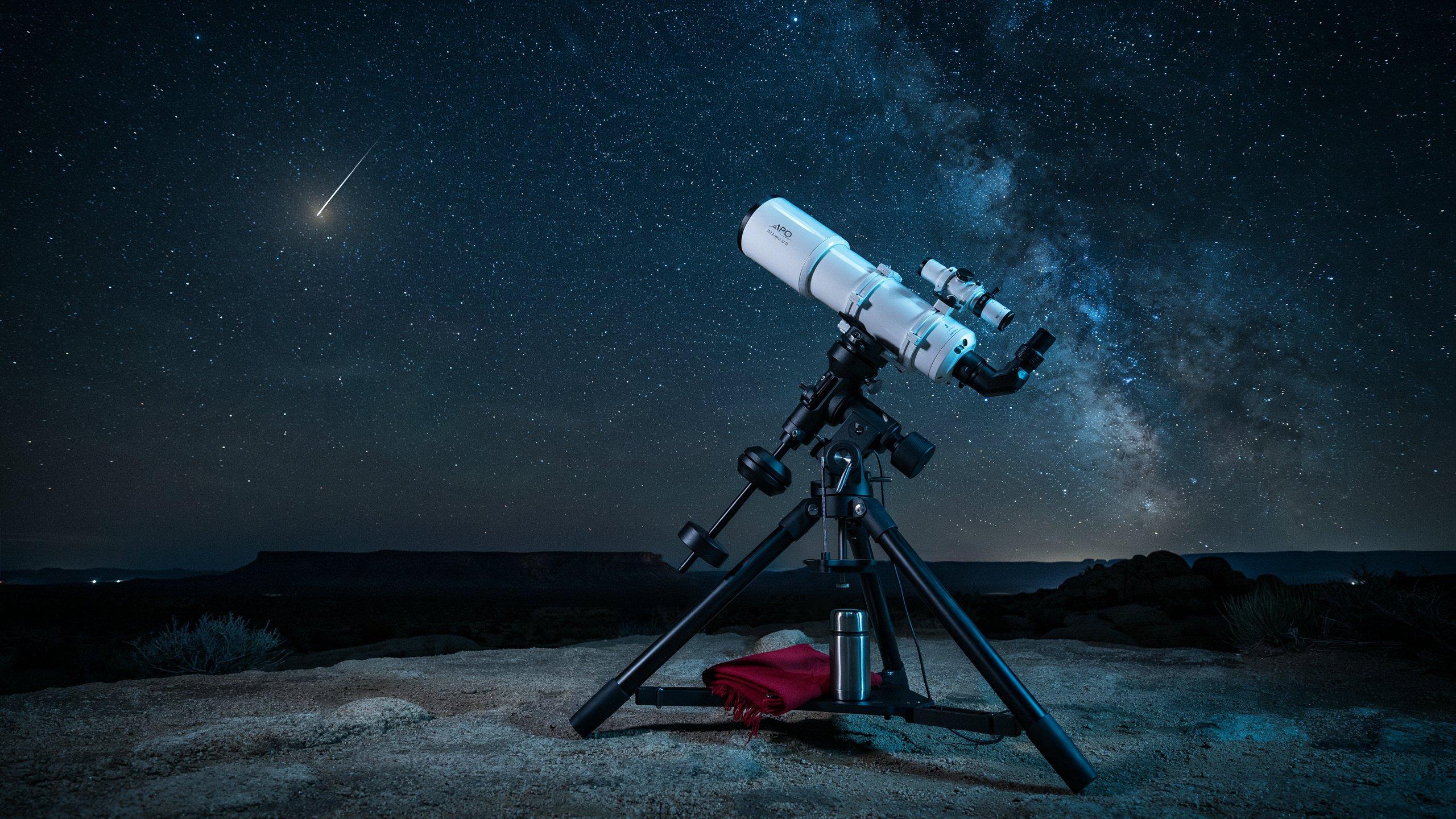
There's a moment in every astrophotographer's journey when they stop thinking about the sky and start thinking hard about the instrument they're using to photograph it. The mount is dialed in, the guiding is working, the camera settings are right — and still, the images aren't what they should be. Stars at the edges of the frame are elongated. Colors bleed slightly around bright stars. The field isn't flat. That's usually the moment someone starts researching what an apochromatic astrograph actually does differently.
Askar's FRA series is one of the most direct answers to that question available in the hobby today. These are telescopes built specifically for imaging — not adapted for it, not tolerant of it, but genuinely engineered around the demands of modern astronomy cameras and wide-field deep-sky work. And for the first time in Pakistan, you can buy them properly.
Understanding What Makes a Dedicated Astrograph Different
Most telescopes are designed primarily for visual observation. Astrophotographers have been using them for imaging for decades, and many do it very well — but there are limitations built into visual designs that start to show up when you're attaching a full-frame camera and trying to produce flat, sharp, color-accurate images across the entire sensor.
The biggest issues are field curvature and chromatic aberration. Field curvature means the focal plane of the telescope isn't flat — the center is in focus but the edges are soft, or vice versa. Chromatic aberration means different wavelengths of light come to focus at slightly different points, which produces those telltale color halos around bright stars that no amount of post-processing fully removes.
Apochromatic telescopes address chromatic aberration with premium glass — typically extra-low dispersion (ED) elements that bring multiple wavelengths to focus at the same point. The Askar FRA series goes further with a quintuplet optical design: five lens elements arranged to correct not just chromatic aberration, but field curvature as well, across a flat imaging circle large enough for full-frame sensors. That's why these telescopes are classified as flat-field astrographs rather than simply APO refractors. They're built from the ground up for the sensor, not the eyepiece.
The FRA Series — Three Instruments, One Philosophy
Askar's FRA lineup is a deliberate progression. Each model shares the same design philosophy — quintuplet flat-field APO, built for wide-field imaging — but scales up in aperture, focal length, and capability.
The entry point for wide-field work
The Askar FRA400 Quintuplet APO Astrograph is where many imagers start with this series. At 60mm aperture and 400mm focal length, it runs at a fast f/6.7, which means shorter individual exposure times to collect the same amount of light as a slower instrument. The flat-field quintuplet design ensures that stars at the corners of a full-frame sensor are as sharp and round as the ones in the center — something that matters enormously when you're framing large nebulae or star-forming regions that span a wide angle of sky. For widefield astrophotography across Pakistan's darker rural skies, this is a compelling instrument at a considered price.
Moving up in aperture without sacrificing speed
The Askar FRA500 Quintuplet APO Astrograph brings the aperture to 72mm and the focal length to 500mm at f/6.9. More aperture means more light-gathering capability, which translates directly into either shorter exposure times or more detail in faint targets. The FRA500 sits in a particularly useful range — enough focal length to frame medium-scale targets like the Orion Nebula region or the Cygnus Wall with satisfying framing, while still being wide enough to capture large emission nebulae in a single panel. If you're putting together a serious deep space imaging rig and want a telescope that won't become the limiting factor in your system, this is where the FRA series starts to feel genuinely professional.
The flagship — serious aperture, serious results
The Askar FRA600 4.3" 108mm F/5.6 Quintuplet Petzval Flat Field Astrograph is the instrument in this lineup that needs no qualification. At 108mm aperture and 600mm focal length running at f/5.6, it collects light at a rate that compresses session times without sacrificing resolution. The Petzval flat-field design at this aperture and speed is technically demanding to execute well — field curvature becomes harder to correct as aperture and speed increase — and the FRA600 handles it. Stars stay round and tight from center to corner. The flat imaging circle covers full-frame sensors confidently. For dedicated imagers chasing faint targets like galaxy clusters, hydrogen-alpha emission regions, or the kind of advanced deep-sky work that separates serious astrophotographers from casual ones, the FRA600 is a complete instrument.
Connecting the Camera Without Compromise
Optical performance means nothing if the connection between telescope and camera introduces mechanical flex, tilt, or the wrong back focus distance. This is where adapters matter — not as an afterthought but as a precision component in the optical chain.
The Askar M54/M48 Camera Adapter for Nikon Z is designed specifically to connect Askar's M54 or M48 threaded focusers to Nikon Z-mount mirrorless cameras. Nikon Z bodies have become popular in astrophotography for their large sensor size, good high-ISO performance, and relatively open flange distance — but they need a properly made adapter to maintain the flat coupling and correct spacing that the optical design requires. Using a poorly toleranced generic adapter with a precision astrograph is like putting cheap tyres on a performance car. The Askar-branded adapter is dimensionally correct for the FRA series and machined to the tolerances the optical design expects.
If you're building an imaging rig around one of the FRA telescopes and running an astronomy camera rather than a DSLR, it's worth pairing the scope with a capable cooled imaging camera to match the optical quality the FRA delivers.
Why Pakistani Imagers Haven't Had This Option Until Now
Askar telescopes have been popular in astrophotography communities in Europe, North America, and Japan for several years. In Pakistan, they've been practically inaccessible — not because the interest isn't there, but because the import situation made getting a genuine unit with proper support nearly impossible. Ordering directly from overseas meant navigating customs, paying duties with no predictability, receiving gear with no local warranty recourse, and hoping nothing went wrong in transit.
SkyDeep is Pakistan's only authorized Askar dealer. That's a formal designation, not a claim — it means the instruments SkyDeep stocks come through official distribution channels, are the genuine articles, and are covered by a real warranty. SkyDeep doesn't carry clones, grey-market units, or products sourced through unofficial routes. The pricing is transparent, duties and freight are already included, and there's someone accountable in Pakistan if you need support after the purchase.
This matters especially for a brand like Askar, where the optical quality you're paying for is only meaningful if what arrives is actually the product Askar designed and manufactured. A counterfeit or heavily used "Askar" telescope at a discounted price isn't a deal. It's an expensive disappointment.
Pairing the Right Mount With a Precision Astrograph
A quintuplet APO astrograph is a precision optical instrument. Putting it on a mount that can't track accurately enough for long exposures — or that introduces vibration, periodic error, or poor polar alignment behavior — is a mismatch that costs you image quality regardless of the optics. The FRA series works best on mounts designed for serious imaging: the kind you find in SkyDeep's equatorial mount collection or the newer harmonic drive options that have changed the weight-to-performance calculation for portable imaging rigs.
If you're not sure which mount is appropriate for the FRA telescope you're considering, book a free consultation with SkyDeep before you buy. Getting the mount right is at least as important as getting the telescope right, and the consultation is genuinely helpful rather than a sales exercise.
The Short Version
Askar's FRA series represents a category of astrophotography instrument that Pakistan's astronomy community hasn't had reliable access to until now. Flat-field quintuplet APO astrographs in three aperture sizes, a precision camera adapter, genuine stock, a real warranty, and the ability to actually get support when you need it.
See the full Askar collection on SkyDeep and if the FRA600 is the telescope you've been putting off, it's in stock now.

 English
 Arabic
 Spanish
 Portuguese
 Deutsch
 Turkish
 Dutch
Dutch
 Italiano
 Russian
 Romaian
 Portuguese (Brazil)
 Greek
Greek