The Core Concept of RWA Tokenization
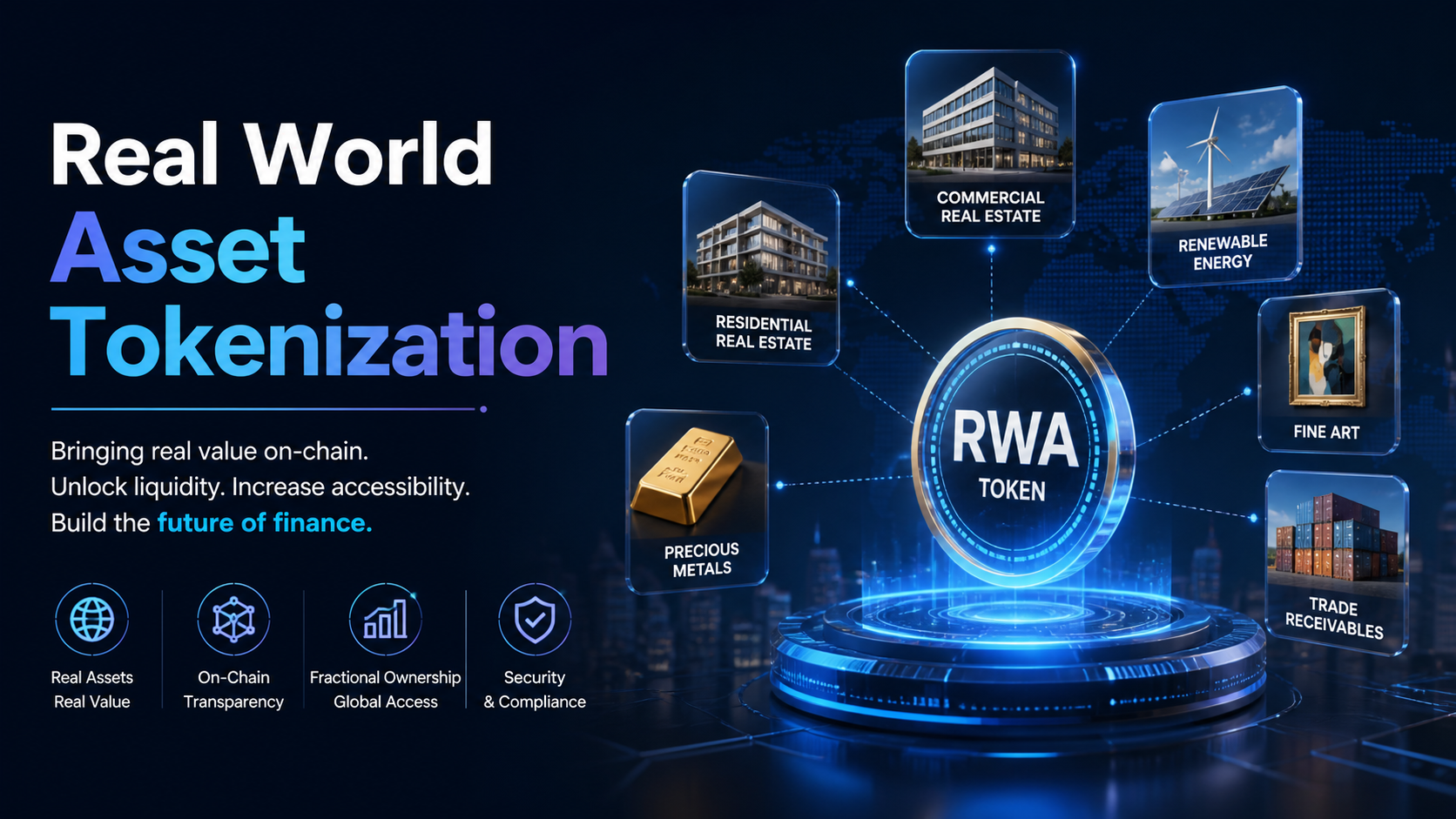
RWA tokenization involves representing ownership rights, revenue streams, or asset-backed claims as digital tokens on a blockchain. These tokens can be programmed with specific rules using smart contracts, enabling automated execution of transactions, compliance, and governance functions.
Each token acts as a unit of value linked to an underlying asset. Depending on the structure, tokens may represent:
- Equity ownership
- Debt instruments
- Revenue-sharing rights
- Usage or access rights
This flexibility allows asset issuers to design structures that align with specific financial objectives while enhancing accessibility and efficiency.
Structural Transformations Enabled by Tokenization
RWA tokenization is not simply digitizing existing systems; it is redefining how assets are structured at a foundational level. Several key transformations illustrate this shift.
1. From Monolithic Ownership to Fractionalized Structures
One of the most significant changes is the move from concentrated ownership to fractionalized participation. Traditional assets are often owned by a single entity or a small group of investors. Tokenization allows these assets to be divided into thousands of smaller units, each represented by a token.
This fractionalization introduces a modular ownership structure, where investors can hold precise portions of an asset based on their capital capacity. It also enables dynamic ownership distribution, allowing assets to be continuously reallocated in response to market demand. As a result, asset structures become more flexible, inclusive, and scalable, accommodating a broader range of participants.
2. Programmable Assets Through Smart Contracts
Tokenized assets are inherently programmable. Smart contracts embedded within blockchain systems define how assets behave, including rules for transfers, revenue distribution, and compliance.
This programmability transforms static assets into dynamic financial instruments. For example, rental income from a property can be automatically distributed to token holders based on predefined conditions. Governance mechanisms, such as voting rights, can also be encoded, enabling decentralized decision-making. By embedding logic directly into asset structures, tokenization reduces reliance on intermediaries and enhances operational efficiency.
3. Enhanced Liquidity Through Digital Markets
Traditional asset structures often lack liquidity, particularly in sectors like real estate or infrastructure. Tokenization introduces the ability to trade asset-backed tokens on digital platforms, creating secondary markets for assets that were previously difficult to exchange. This shift redefines liquidity as an inherent feature of asset design rather than an external function. Assets can now be structured with built-in liquidity mechanisms, allowing investors to enter and exit positions more easily. The result is a more fluid market environment, where capital can move efficiently across different asset classes.
4. Decentralized Ownership and Governance Models
Tokenization enables decentralized ownership structures, where decision-making is distributed among token holders rather than centralized authorities. Governance rights can be encoded into tokens, allowing investors to participate in key decisions such as asset management, upgrades, or sales. This decentralized approach introduces a new layer of transparency and accountability. All governance actions are recorded on the blockchain, providing an auditable trail of decisions and outcomes. Such structures are particularly relevant for large-scale or community-driven assets, where collective participation can enhance value creation.
5. Integration of Financial and Operational Layers
In traditional systems, financial ownership and operational management are often separate. Tokenization bridges this gap by integrating financial and operational data within a unified blockchain framework. For example, performance metrics such as occupancy rates, revenue streams, or maintenance costs can be linked directly to tokenized assets. This integration allows investors to monitor asset performance in real time and make informed decisions. By aligning financial and operational layers, tokenization creates more transparent and responsive asset structures.
6. Customizable and Hybrid Asset Models
Tokenization allows for the creation of hybrid asset structures that combine elements of equity, debt, and utility. For instance, a token could provide both ownership rights and access privileges, such as usage rights in a hospitality property. This flexibility enables issuers to design innovative financial instruments tailored to specific use cases. Hybrid models can optimize risk-return profiles, attract diverse investor segments, and enhance overall asset utility. As a result, asset structures become more adaptable and aligned with evolving market demands.
7. Global Accessibility and Borderless Participation
Traditional asset structures are often constrained by geographical boundaries and regulatory barriers. Tokenization enables global participation by allowing investors to access assets through digital platforms. While compliance requirements still apply, blockchain-based systems streamline cross-border transactions and reduce friction. Assets can be structured to accommodate international investors, expanding the potential capital pool. This global accessibility transforms assets from localized investments into globally distributed opportunities.
Sector-Specific Implications
The structural changes introduced by RWA tokenization have significant implications across various sectors.
Real Estate
In real estate, tokenization enables fractional ownership, improved liquidity, and global investment access. Properties can be structured as digital assets with automated income distribution and transparent ownership records.
Hospitality
Hotels and resorts can adopt revenue-sharing or fractional ownership models, aligning investor returns with operational performance. Tokenization also supports innovative structures such as tokenized timeshares.
Infrastructure
Large-scale infrastructure projects can benefit from tokenized funding models, allowing multiple stakeholders to participate in development and revenue sharing.
Commodities
Tokenization enables the digitization of physical commodities, creating more efficient trading systems and enhancing price transparency.
Challenges in Structural Transformation
Despite its potential, RWA tokenization faces several challenges that influence how asset structures evolve.
Regulatory Complexity
Tokenized assets often fall under securities regulations, requiring compliance with legal frameworks across multiple jurisdictions. Structuring assets to meet these requirements can be complex.
Standardization
The lack of standardized frameworks for tokenization can create inconsistencies in asset design and interoperability. Industry-wide standards are needed to ensure seamless integration.
Technology Risks
Blockchain systems must address scalability, security, and interoperability challenges to support large-scale adoption.
Market Acceptance
Adoption depends on investor confidence and understanding. Educating stakeholders about tokenized asset structures is essential for growth.
The Future of Asset Structuring
As tokenization continues to evolve, asset structures are likely to become increasingly digital, programmable, and interconnected. Future developments may include:
- Fully automated asset management systems
- Integration with decentralized finance (DeFi) protocols
- Real-time valuation and dynamic pricing models
- Cross-platform interoperability for tokenized assets
These advancements will further blur the boundaries between traditional finance and digital ecosystems, creating a more unified and efficient financial landscape.
Conclusion
Real-world asset tokenization is fundamentally changing the way assets are structured by introducing fractional ownership, programmability, liquidity, and global accessibility. By transforming static, centralized models into dynamic, decentralized systems, tokenization redefines how assets are created, managed, and traded. The shift from traditional frameworks to blockchain-based structures is not without challenges, but the potential benefits are substantial. As technology matures and regulatory clarity improves, tokenization is poised to become a foundational element of modern asset design. In this evolving landscape, assets are no longer confined by physical boundaries or rigid structures. Instead, they are becoming flexible, transparent, and globally accessible entities, reflecting a new paradigm in financial and economic organization.



 English
 Arabic
 French
 Portuguese
 Deutsch
 Turkish
 Dutch
Dutch
 Italiano
 Russian
 Romaian
 Portuguese (Brazil)
 Greek
Greek