

Managing Customer Expectations During Weather-Related Delivery Delays
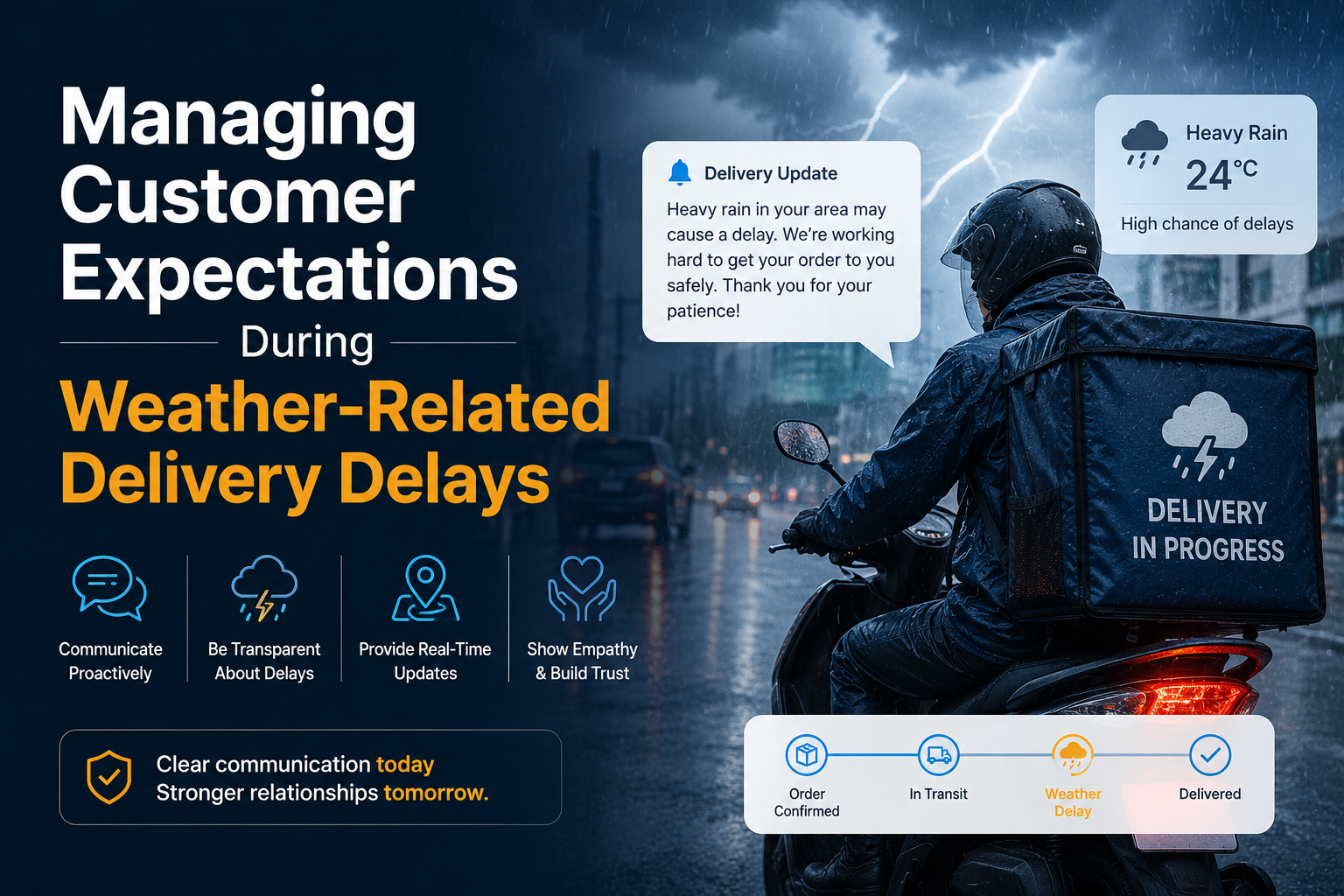
Managing Customer Expectations During Weather-Related Delivery Delays
Bad weather has a way of throwing off almost any delivery schedule, especially if your business operates in a region that experiences harsh or severe weather. Rain, flooding, snow, high winds, storms, and extreme heat can all impact the safety and speed of delivery. On the other hand, it can be incredibly frustrating for a customer to have to wait for an important package if the weather simply isn’t cooperating.
The key problem for businesses involved in delivery services is that the issues can’t always be avoided, which means the focus must turn to managing customer expectations through effective communication.
With the right tools and software, including an intuitive delivery tracking app , companies can manage both customers’ expectations while supporting their drivers during weather-related delays and disruptions.
Differences Between Weather-Related Delays and Delays
While there are a number of different reasons for delivery disruptions, bad weather presents unique challenges. When the weather turns, especially dramatically, it can add hours to delivery times or delay delivery for an extended period. Some roads may flood, some will be closed due to the dangers posed by the weather, and other roads will simply be inaccessible for safety reasons.
Customers know that delays due to weather are generally out of your control, but that doesn’t help the situation.
For example, a customer who is expecting a delivery by 2 p.m. will undoubtedly be concerned if they don’t hear from you by 3 p.m. That means they’ll have questions, like:
- Where is my order?
- Is my package on the way?
- Is my delivery cancelled?
- Do I need to contact customer support?
With proactive communication, many of these questions can be avoided entirely. This is particularly important for customers who use tracking software to follow your deliveries.
Communication Should Come From You First
Perhaps one of the easiest ways to manage customer expectations during weather-related delivery delays is to simply communicate with them directly. Instead of waiting for a customer to call or send an inquiry, you should be the first one to let them know what is happening and what to expect. An automated message along the lines of ‘Severe weather is causing an unexpected delay of 30-60 minutes’ is an excellent beginning.
Generally speaking, customers will accept most issues so long as they know what the circumstances are. It’s important, then, to share useful information while avoiding statements you don’t intend to follow through on.
Transparency Helps Customers Feel Valued and Informs Them
A delivery tracking app is an incredible tool when it comes to weather-related delivery delays because it gives customers a look into what is happening with their order while it’s en route. Rather than waiting until an order is delivered, customers can watch in near-real-time as it makes its way to them. In addition, they can get an idea of the driver’s location, current progress, and, in some cases, approximate arrival times. This level of transparency is extremely helpful in reducing customer frustration and anxiety surrounding weather-related delivery delays.
At the same time, a delivery tracking app benefits your business too. It can help reduce the number of customer service requests and calls because customers have the information they need directly from the tracking software. They won’t need to contact customer support to find out what’s happening if they can get the information themselves.
Don’t Sacrifice Driver Safety for the Sake of On-Time Deliveries
Even as you work to manage customer expectations, it’s incredibly important to remember that customer satisfaction shouldn’t come at the cost of driver safety. During severe weather, it’s crucial to give drivers the flexibility and leeway they need to make smart decisions about when and where to make deliveries.
As a result, let them know that you’re not going to penalize them or punish them for not meeting delivery expectations due to inclement weather. A good delivery tracking app can assist with this by letting customer support and operations personnel know when drivers are delayed without having to call in directly.
Use Intelligent Routing to Stay on Schedule
Weather conditions can render some delivery routes inaccessible or unviable. If your delivery management system includes smart routing, it can help determine whether alternate routes should be used. For example, it might be possible to avoid flooded streets by using a different street or neighborhood.
Technology can help you streamline and improve operations during inclement weather by letting you know the safest and most accessible delivery routes based on the current conditions. A centralized delivery management system is essential for companies that have numerous delivery drivers making multiple stops each day.
Give Customers Reasonable Estimated Delivery Times
During inclement weather, it can be tempting to provide customers with a worst-case scenario delivery estimate. If a package normally takes 30 minutes to deliver, it may take an hour or more during bad weather, which means you’ll want to update the estimated delivery window accordingly. It’s important to give customers realistic delivery times.
For example, you shouldn’t say something like, ‘Your delivery will be here 10 minutes from now’ if a storm is about to roll through the area. Instead, you could say something like ‘Due to heavy rain in your area, your delivery is expected within the next 30-45 minutes.’
This way, the customer knows their order is on the way, but they also have a realistic understanding of when it should arrive.
Segment Your Deliveries Based on Risk
Not all deliveries are going to be impacted by severe weather, which means it’s a good idea to segment them based on risk. The reality is that some deliveries can and should continue during inclement weather, including:
- Those on less risky routes
- Those with time-sensitive deliveries
- Those to customers who’ve already been delayed
- Those in areas where the weather is clearing up
- Those that can be made without putting drivers in danger
A centralized delivery tracking app can help you see which of your deliveries fall under these categories, which makes it much easier to respond to customer concerns while continuing to make the deliveries that can get done.
Make Sure Your Customer Support Team Has the Information They Need
Not all customers will be satisfied with the information they receive, which means it’s important to ensure your customer support team has all the information they need to respond to customer concerns. In addition, they should know the latest information regarding delivery times, driver availability, and other relevant information. That way, they’re ready to handle customer concerns, including delivery updates, as they arise.
With the right tools and systems in place, your customer support team can go above and beyond to reassure customers that their deliveries are on the way and that you’re doing everything you can to get them to their doors as soon as possible.
Always Take Advantage of Opportunities to Improve Following Inclement Weather
Once the weather clears up, your job isn’t done. It’s important to go over what happened during the severe weather to identify areas for improvement. Were there specific routes that should be avoided during inclement weather in the future? How many deliveries were impacted? How long were drivers delayed? Which messages resonated with customers? Did estimated delivery times prove to be accurate?
A good delivery tracking app can give you valuable information and insight into your operations, including how you performed during inclement weather, allowing you to take steps to improve in the future.
Final Thoughts
Weather-related delivery delays are inevitable, but losing customers due to poor communication is not. Businesses that keep customers reasonably well-informed and prepared for weather-related delivery delays will find themselves in a much better position than those who don’t. By doing so, they can provide a better customer experience during delivery disruptions while ensuring their operations teams have the information they need to manage expectations.
A delivery tracking app can greatly benefit your operations by providing transparency and giving you the information you need to manage your own expectations while keeping your customers well-informed. By doing so, you’ll be able to better compete with larger delivery companies, ensuring you can continue to serve local customers despite larger competitors.

 English
 Arabic
 French
 Spanish
 Portuguese
 Deutsch
 Turkish
 Dutch
Dutch
 Italiano
 Romaian
 Portuguese (Brazil)
 Greek
Greek