

Why a Silicone Gel SPF 50 Sunscreen for Face Feels Different on Oily Skin
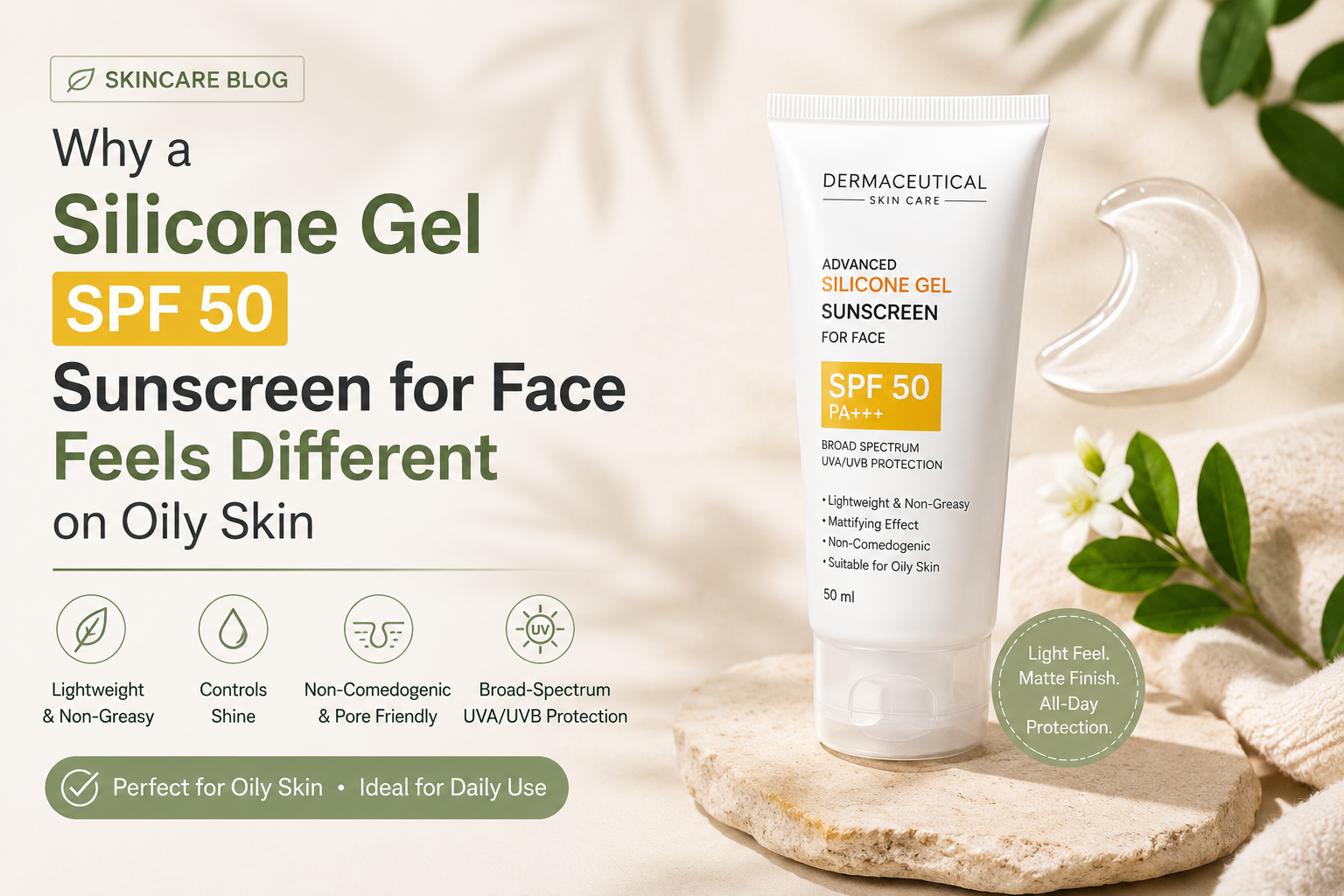
If you have oily skin, you already know the struggle. Many sunscreens leave behind a greasy shine, clog pores, or make your face feel heavy within a few hours. That's why many dermatologists and skincare enthusiasts recommend a SPF 50 sunscreen for face in a silicone gel formula. Unlike traditional cream-based sunscreens, silicone gel sunscreens create a lightweight, smooth finish that feels almost invisible on the skin.
But what exactly makes silicone gel sunscreens feel different? Is it just marketing, or is there actual science behind the texture?
In this guide, we'll explain why silicone gel sunscreens work so well for oily skin, how they compare with cream formulas, and what to look for when choosing the best non-greasy SPF 50 sunscreen for oily skin.
Table of Contents
-
Why Sunscreen Texture Matters
-
What Is a Silicone Gel Sunscreen?
-
Why Silicone Gel Feels Better on Oily Skin
-
The Science Behind Silicone Ingredients
-
Silicone Gel vs Cream Sunscreen
-
Benefits of SPF 50 PA+++ Sunscreen
-
How to Choose the Right Sunscreen
-
Daily Summer Skincare Routine
-
Common Mistakes to Avoid
-
Real-Life Example
-
FAQs
-
Conclusion
-
Key Takeaways
-
Call-to-Action
Why Sunscreen Texture Matters
Many people think sunscreen effectiveness depends only on SPF. While SPF is important, the texture determines whether you'll actually wear it every day.
For oily skin, an ideal sunscreen should:
-
Feel lightweight
-
Absorb quickly
-
Leave little or no white cast
-
Reduce excess shine
-
Work well under makeup
-
Avoid clogging pores
If a sunscreen feels greasy, users often apply too little or skip reapplication altogether, reducing protection.
What Is a Silicone Gel Sunscreen?
A silicone gel sunscreen uses lightweight silicone-based ingredients instead of heavy oils to create a silky texture.
Common silicone ingredients include:
-
Dimethicone
-
Cyclopentasiloxane
-
Polysilicone compounds
-
Dimethicone Crosspolymer
These ingredients don't replace UV filters. Instead, they improve how the sunscreen spreads and feels on your skin.
Unlike oily creams, silicone gels glide smoothly and leave a soft matte finish.
Why Silicone Gel Feels Different on Oily Skin
1. Lightweight Texture
Silicone molecules spread easily across the skin without creating a thick layer.
Instead of sitting heavily on the face, they create an ultra-thin protective film.
Result:
-
Less greasy feeling
-
More comfortable wear
-
Faster absorption
2. Controls Excess Shine
One of the biggest reasons oily skin users love silicone gel sunscreen is its oil-blurring effect.
Many silicone polymers create a soft-focus finish that diffuses light, making the skin appear less shiny.
This is why many people use a sunscreen gel for face for daily use in summer instead of cream-based formulas.
3. Doesn't Feel Sticky
Traditional lotions often contain more oils and emollients.
Silicone gels:
-
Dry faster
-
Feel smooth
-
Prevent sticky residue
This makes them ideal in hot and humid climates.
4. Creates a Breathable Barrier
Silicones form a breathable layer.
Contrary to popular myths, cosmetic-grade silicones are generally considered non-comedogenic and allow normal skin function while reducing water loss.
5. Works Well Under Makeup
Many makeup primers contain silicone for one simple reason:
It smooths the skin.
A silicone gel sunscreen doubles as a primer by:
-
Filling uneven texture
-
Helping foundation glide evenly
-
Preventing makeup from separating
The Science Behind Silicone Ingredients
Here's how common silicone ingredients work.
|
Ingredient |
Purpose |
Benefit for Oily Skin |
|
Dimethicone |
Skin protectant |
Smooth finish |
|
Cyclopentasiloxane |
Volatile silicone |
Lightweight feel |
|
Dimethicone Crosspolymer |
Texture enhancer |
Blurs pores |
|
Silica |
Oil absorber |
Reduces shine |
|
Polymethylsilsesquioxane |
Soft-focus powder |
Matte finish |
These ingredients improve the user experience without reducing UV protection when properly formulated.
Silicone Gel vs Cream Sunscreen
|
Feature |
Silicone Gel |
Cream Sunscreen |
|
Texture |
Lightweight |
Thick |
|
Shine |
Low |
High |
|
Makeup Friendly |
Excellent |
Moderate |
|
Best for Oily Skin |
Yes |
Sometimes |
|
Summer Use |
Excellent |
Can feel heavy |
|
Absorption |
Fast |
Slower |
Understanding SPF 50 PA+++ Sunscreen Benefits
Many consumers focus only on SPF, but the PA rating matters too.
What Does SPF 50 Mean?
SPF 50 filters approximately 98% of UVB rays when applied correctly.
UVB rays are primarily responsible for sunburn.
What Does PA+++ Mean?
PA ratings measure UVA protection.
UVA rays contribute to:
-
Premature aging
-
Wrinkles
-
Hyperpigmentation
-
Collagen breakdown
One of the major SPF 50 PA+++ sunscreen benefits is balanced protection against both UVB and substantial UVA exposure, making it suitable for everyday outdoor use.
Why Oily Skin Needs Sunscreen Every Day
Skipping sunscreen can lead to:
-
Dark spots
-
Acne marks becoming darker
-
Uneven skin tone
-
Premature aging
-
Increased UV damage
Even on cloudy days, UVA rays penetrate clouds and windows.
Daily protection is essential year-round.
How to Choose the Best Non-Greasy SPF 50 Sunscreen for Oily Skin
Look for these features:
✓ Gel-Based Formula
Gels generally feel lighter than creams.
✓ Oil-Free
Helps minimize excess shine.
✓ Non-Comedogenic
Designed to reduce the likelihood of clogged pores.
✓ Broad-Spectrum Protection
Protects against UVA and UVB rays.
✓ SPF 50
Suitable for extended outdoor exposure when combined with other sun-protection measures.
✓ PA+++
Provides strong UVA protection.
✓ Water Resistance
Helpful for sports, sweating, and outdoor activities.
Daily Summer Skincare Routine
If you're looking for the ideal sunscreen gel for face for daily use in summer, follow this simple routine:
-
Cleanse your face.
-
Apply a lightweight serum if needed.
-
Use a moisturizer if your skin feels dehydrated.
-
Apply SPF 50 sunscreen for face generously (about two finger lengths for the face and neck).
-
Wait 10–15 minutes before makeup.
-
Reapply every two hours when outdoors, or after swimming or heavy sweating.
Real-Life Example
Emily, Florida
Emily has combination-to-oily skin and spends much of her day commuting and working outdoors.
She switched from a rich cream sunscreen to a silicone gel formula.
Within two weeks she noticed:
-
Less midday shine
-
Makeup lasted longer
-
No sticky feeling
-
Easier daily sunscreen habit
The change wasn't because gel formulas provide more UV protection—it was because the improved feel made consistent application and reapplication easier.
Common Mistakes People Make
Avoid these common sunscreen mistakes:
-
Applying too little sunscreen
-
Forgetting the neck and ears
-
Skipping reapplication
-
Believing oily skin doesn't need moisturizer
-
Using expired sunscreen
-
Assuming SPF in makeup is enough
-
Applying sunscreen only on sunny days
Actionable Tips for Better Sun Protection
-
Apply sunscreen as the last step of your morning skincare routine.
-
Use approximately 1/4 teaspoon for the face alone.
-
Reapply every two hours outdoors.
-
Wear sunglasses and a wide-brimmed hat for added protection.
-
Store sunscreen away from excessive heat.
-
Patch-test new products if you have sensitive skin.
Frequently Asked Questions
1. Is silicone gel sunscreen good for acne-prone skin?
Many silicone gel sunscreens are formulated to be lightweight and non-comedogenic, making them a popular choice for acne-prone skin. However, individual formulations vary, so check the ingredient list and product claims.
2. Does silicone clog pores?
Current dermatological evidence indicates that cosmetic-grade silicones such as dimethicone are generally non-comedogenic and form a breathable protective layer rather than sealing the skin completely.
3. Is SPF 50 enough for everyday use?
Yes. SPF 50 provides very high UVB protection for daily use when applied generously and reapplied as directed.
4. Can I wear silicone gel sunscreen under makeup?
Yes. Silicone gel sunscreens often provide a smooth, primer-like finish that works well beneath foundation and other makeup products.
5. Is gel sunscreen better than cream sunscreen?
Not necessarily. Both can provide excellent UV protection. Gel formulas are often preferred by people with oily skin because they feel lighter and less greasy.
6. Can oily skin skip sunscreen indoors?
No. UVA rays can penetrate window glass, so daily sunscreen remains beneficial, especially if you spend time near windows.
7. Should I use sunscreen during winter?
Yes. UV exposure occurs throughout the year, even during cooler months.
Conclusion
Choosing the right SPF 50 sunscreen for face isn't only about the protection number—it's also about comfort and consistency. Silicone gel formulations stand out because they feel lightweight, reduce excess shine, and layer well with makeup, making them especially appealing for oily skin.
If you've struggled with greasy sunscreens in the past, a silicone gel formula may help you stick to daily sun protection. Combined with the SPF 50 PA+++ sunscreen benefits of broad-spectrum coverage, it offers a practical solution for maintaining healthier-looking skin while supporting long-term UV protection.

 Arabic
 French
 Spanish
 Portuguese
 Deutsch
 Turkish
 Dutch
Dutch
 Italiano
 Russian
 Romaian
 Portuguese (Brazil)
 Greek
Greek