

Your Guide to Personalizing Training Videos Like a Pro
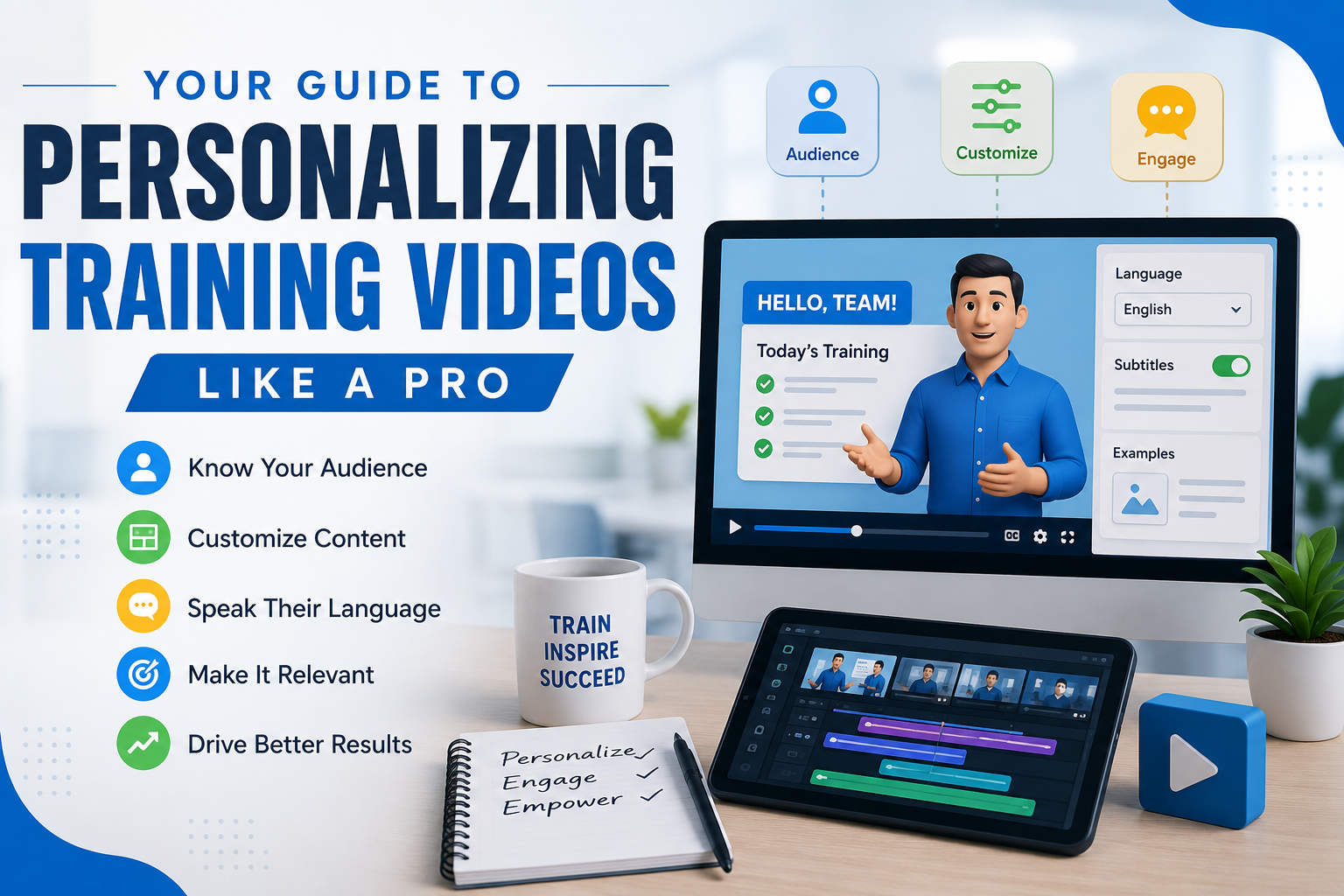
Introduction
Training videos have become one of the most effective ways for businesses to educate employees, onboard new hires, and develop professional skills. However, not every training video delivers the same results. Generic content often fails to keep viewers engaged because it doesn't address their specific roles, challenges, or learning needs.
This is where personalizing training videos makes a significant difference. Personalized training content speaks directly to the audience, making learning more relevant, engaging, and memorable. Instead of presenting the same information to everyone, organizations can tailor videos based on job roles, departments, experience levels, or individual learning goals.
Whether you're training sales teams, customer support representatives, healthcare professionals, or remote employees, personalized videos can improve knowledge retention, increase engagement, and help learners apply information more effectively.
In this guide, you'll discover why personalizing training videos is essential, how to create effective customized learning experiences, and the best practices that lead to measurable business results.
What Are Personalized Training Videos?
Personalized training videos are educational videos designed to meet the needs of a specific audience rather than delivering identical content to every learner.
Personalization may include:
- Role-specific examples
- Department-focused scenarios
- Individual learning paths
- Company branding
- Employee names or locations
- Local regulations and compliance requirements
- Different languages
- Interactive learning experiences
Instead of asking every employee to watch the exact same training material, organizations provide content that directly relates to each learner's daily responsibilities.
Why Personalizing Training Videos Matters
Modern employees expect learning experiences that are relevant and engaging. When training feels generic, viewers quickly lose interest and retain less information.
Personalized videos help employees understand how training applies to their actual work, making learning more meaningful.
Some major benefits include:
- Higher employee engagement
- Better knowledge retention
- Faster onboarding
- Improved productivity
- Increased completion rates
- Stronger employee confidence
- Reduced training costs over time
Organizations that invest in customized learning experiences often see better performance because employees understand exactly how to apply new knowledge in real-world situations.
Benefits of Personalizing Training Videos
1. Increases Employee Engagement
Employees are more likely to pay attention when training reflects their job responsibilities.
Instead of watching unrelated examples, they see situations they encounter every day, making the content immediately valuable.
Higher engagement also means employees are more likely to complete courses without skipping important information.
2. Improves Knowledge Retention
People remember information that feels personally relevant.
By using familiar examples, realistic scenarios, and role-specific demonstrations, organizations help learners connect new knowledge with their daily tasks.
This improves long-term memory and reduces the need for repeated training sessions.
3. Speeds Up Employee Onboarding
New hires often receive overwhelming amounts of information during onboarding.
Personalized training videos simplify the learning process by presenting only the information relevant to the employee's department and responsibilities.
This reduces confusion while helping new team members become productive much faster.
4. Creates Better Learning Experiences
Every employee learns differently.
Some prefer visual demonstrations.
Others learn best through storytelling or interactive examples.
Personalized training allows organizations to combine different learning methods that match audience preferences, creating a more enjoyable experience.
5. Supports Remote and Hybrid Teams
Remote work has changed how organizations train employees.
Personalized training videos ensure every employee receives consistent information regardless of location while allowing regional customization where necessary.
This creates a unified learning experience across multiple offices or countries.
Best Practices for Personalizing Training Videos
Know Your Audience
Successful personalization begins with understanding your viewers.
Consider factors such as:
- Job role
- Experience level
- Department
- Technical knowledge
- Learning objectives
- Geographic location
- Preferred language
The better you understand your audience, the easier it becomes to create meaningful training.
Define Clear Learning Objectives
Every personalized video should have one specific purpose.
Ask questions like:
- What should viewers learn?
- Which problem should this training solve?
- Which behaviors should change after watching?
Clear objectives help keep videos focused and prevent unnecessary information from overwhelming learners.
Use Real-World Scenarios
Practical examples make learning easier.
Rather than explaining concepts theoretically, demonstrate situations employees actually encounter.
Examples include:
- Customer interactions
- Workplace safety procedures
- Product demonstrations
- Software tutorials
- Team collaboration
- Compliance situations
Realistic scenarios improve understanding and confidence.
Keep Videos Short and Focused
Long videos often reduce attention spans.
Instead of producing one lengthy presentation, divide content into shorter modules that focus on individual topics.
Microlearning videos between 3 and 8 minutes typically achieve higher completion rates while making information easier to remember.
Use High-Quality Visuals
Professional visuals improve credibility and engagement.
Animation, motion graphics, screen recordings, infographics, and live-action demonstrations help explain complex topics more effectively.
Businesses looking to create engaging and customized learning experiences often work with experienced production companies like Hatch Studios, which specializes in creating professional training animations and educational videos that simplify complex information while keeping audiences engaged.

 English
 Arabic
 Spanish
 Portuguese
 Deutsch
 Turkish
 Dutch
Dutch
 Italiano
 Russian
 Romaian
 Portuguese (Brazil)
 Greek
Greek