

How Professional Logo Design Builds a Strong and Memorable Business
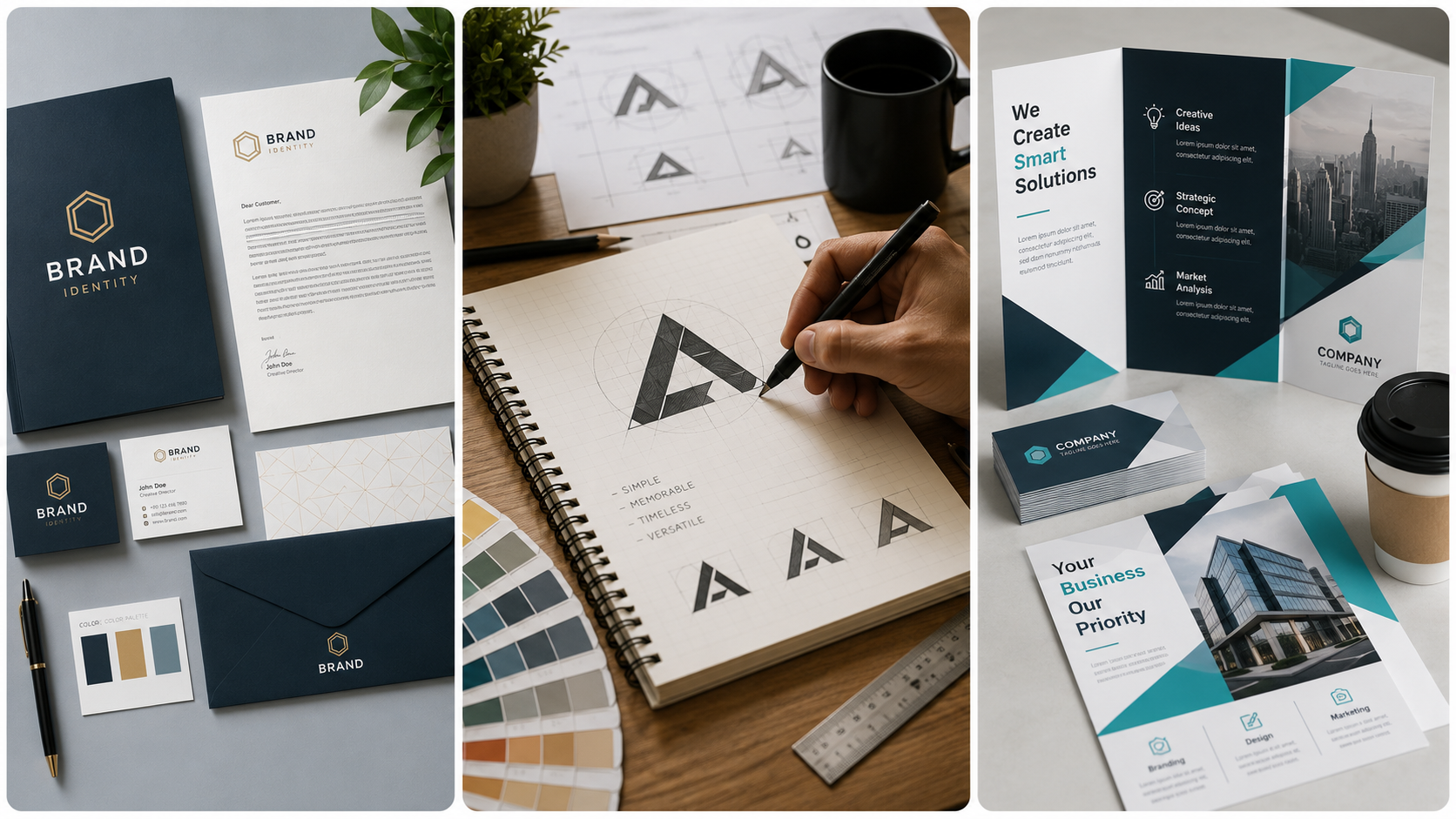
The logo is among the first things that the public will see when it comes to a company. It is always found on websites, social media profiles, ads, packaging, stationery, uniforms and signage. Though it might seem like a straightforward piece of work, a logo can convey a business' character, its values, its sector, and its professionalism in mere seconds.
A good logo will enable the customer to identify a business and make it stand out from other businesses. It builds recognition and acts as a visual cue for the company's offerings, products and brand. A good logo is a way for new businesses to gain credibility. For established companies, it is an aid to recognition and helps to maintain customer trust.
There is a number of steps to take when designing a successful logo, which includes research, strategy, creativity and technical know-how. It should be visually appealing and also relevant, flexible and clear for all the platforms.
Understand the Business Before Designing
The very first step in the logo design should be to have a clear understanding of the business. When designing, it is important for designers to understand what the company provides, who they're designing for, what sets them apart and how they wish to be viewed.
Some key points can be the mission, values, target audience, competitors, market position and corporate objectives. The graphics and visual approach for a logo design for a luxury property business will be different from the one used for a children's education site.
The personality of the brand is also a factor that should influence the design. May be professional, friendly, innovative, dependable, bold, traditional, or playful. If this is not done, the logo can appear good, but not depict the business in an accurate way.
Research the Target Audience
A Logo should connect with the individuals that are most likely to relate to the brand. The audience research is conducted to learn about the expectations, preferences and buying habits of the audience.
Design may be affected by factors such as age, location, profession, interests, income and cultural background. A tech firm may want a sleek and stylish logo, while an old brand might opt for a classic font and iconic images.
Designers need to also do customer usage research on the business. When the logo is designed to be used on a cell phone app, it ought to be easily readable at a very small size. A store's logo can be required to function well when it's displayed on a large store sign.
Study the Competitive Market
To find out what your competitors are doing and how you can make a difference. It's like businesses will share the same color, symbol, and typography in the same market.
Financial institutions commonly use blue as a symbol of trust, for instance, or nature-oriented pictures and graphics are used by organic or wellness enterprises. It's good to follow the trends in business which will help customers understand what it does but it's not good to copy what the competitors do and having the brand will not be remembered.
The objective is to develop a logo that is relevant to the industry, but at the same time, has a distinct logo. In order to gain insights, designers should study competitors, but not for the purpose of copying.
Choose the Right Type of Logo
There are various types of logos that are suitable for different businesses. A wordmark is a design that features the business' name. It is available for a business that has a short name or memorable name.
A lettermark is a mark that consists of initials, and is suitable for long company names. A symbol/ icon may also stand for the brand if the logo is non-verbal, but it could take a while for the customers to identify it.
Combination marks are a combination of a symbol and company name. They are flexible as they can be used in conjunction or independently. Emblems are a badge or shape with text in it that are normally used by traditional businesses, government organisations and schools and clubs.
There are different types, best suited to the company name, the audience, industry and applications.
Keep the Design Simple
Simple logos can often be more easily recognized and remembered. They are clear and legible on small screens, on printing paper and on large signage.
A logo that is too colourful, detailed, decorative or with too many effects can be hard to comprehend. Some more complicated designs might also become unclear when scaled down.
A simple logo doesn't necessarily have to be simple. It represents that every shape, line, letter and colour should serve a purpose. An idea that's well conceived often makes a better impression than any kind of excess frills.
A simple logo also can be easily reproduced on digital and print media.
Select Appropriate Typography
Typography is a key consideration for any brand's image. Serif fonts tend to be traditional, set-up or sophisticated. Sans-serif fonts typically have a contemporary, clear and accessible look.
While script fonts can convey style, creativity and personality, it is important they are used wisely as decorative lettering can cause a loss in readability. Bold – may lend a sense of confidence, lighter – may communicate elegance or minimalism.
Custom lettering can help to stand out and create a more unique logo. Designers can tweak the spacing, shape, angle and/or proportion of the letter to make it their own wordmark.
The font type that is chosen should be readable at various sizes and should embody the personality of the company.
Use Colors Strategically
Colors have a psychological effect and impact on the brand. Blue can convey a sense of trust, stability, and professionalism. Red is a color that can convey feelings of energy, confidence, or urgency. Green is a color that has been traditionally linked to growth, nature and health.
Black can evoke a sense of sophistication or gravitas, while orange and yellow can appear lively, charismatic and cheerful. The association of purple with creativity, luxury or imagination is sometimes found.
Colour decisions should take into account the audience, industry, respective culture and competition. Another important point about a logo is that it should be black and white in case it gets used in a document, on a stamp, packagings or on a single-colour printing.
Many times a limited color choice is more practical and more easily recognized than a large number of colors.
Create a Distinctive Concept
An unforgettable brand logo needs a concept that is associated to the business. It can be based upon the company's name, history, location, product, services, or even the values of the company.
Negative space, geometric shapes, abstract forms, customized letters or visual symbolism can all be used to create meaning for designers. The idea should be kept comprehensible and meaningful, however.
Not using common icons appropriately and effectively without making modifications to them can cause logo to look generic. Just a house symbol isn't sufficient for a construction company, and a technology brand doesn't necessarily require a circuit pattern.
The thoughtfully designed concept gives character to a logo and helps customers to remember it.
Design for Different Applications
A logo should work well in a variety of applications. It can be featured in a website header, mobile app, social media profile, email signature, business card, brochure, uniform, vehicle, product box or billboard.
Designed logo should be tested on small and large size. The logo may look distorted when reduced, and may lose some of the thin lines or small text, or intricate shapes.
Responsive logo versions can help to increase versatility. The logo can either be the whole design with the symbol and business name or just the symbol for social media profiles and favicons.
There should be horizontal, vertical, monochrome and reversed versions to accommodate different backgrounds and layouts.
A logo shouldn't be based solely on the latest design fashions, but should be inspired by them. Too many gradients, effects, fonts or symbols can easily give a design an antiquated feel.
Avoid Short-Lived Design Trends
That doesn't imply that the logo might not be changed in the future. Established brands will slowly change their logos to make it easier to read and to be more useful in digital media, but they will retain characteristics that are familiar to them.
A strategic evolution is more successful than a myriad of redesigns which can baffle customers.
Request Feedback Carefully
It's important to gather feedback as you design; however, it is important that feedback comes from individuals who have knowledge of the brand and target audience.
Too many irrelevant people may be able to provide different answers. Strategic design decisions don't go by personal preference.
The feedback should be on the following points: Logo represents the business, Logo appeals to intended audience, Logo is readable, Logo works with various applications.
Each concept has to have a rationale given by the designer – including typography, colour, shape and layout. This aids decision makers in making an objective design evaluation.
Prepare Professional Logo Files
After the design has been approved, the business will be given files that can be used for both digital and print media. Although PNG files are great for digital applications with transparency, vector format is necessary to create a logo that will look quality when enlarged.
The final product can contain primary and secondary logo design, icons, the black and white versions, color reference and basic instructions on how to use.
A professional Logo Design Service can take care of research, brainstorming, revisions, technical preparation, and delivery of the final product, ensuring that the final product is functional and consistent.
To create visual branding and professional design assistance, businesses can consider the possibility of using pixifyo while making a comparison with creative partners.
Protect Logo Consistency
After creating a logo, it must be utilized uniformly. The identity can be weakened if the stretch, recolor, rotation and/or effects are applied to it.
Basic guidelines should provide information on minimum size, space available, allowable colors, color backgrounds allowed, incorrect uses. These standards will assist employees, marketers, designers and printers in the proper utilization of the logo.
Consistency builds familiarity. The more often that the same logo is displayed in an appropriate fashion, the more that the logo will become associated with the business.
Final Thoughts
One of the qualities of a successful logo is that it is more than just an attractive graphic. It is a tool of the strategic business asset that helps recognise, trust and professional communication.
The best logos are derived from a clear research, understanding of the audience, meaningful concepts, appropriate typography and careful selection of colors. They are simple enough to remember, and flexible enough to be used for both digital and print.
A consistent use of a logo that is a true reflection of the company can be an important part of the customer experience. With time, it can aid a business in developing a recognizable identity and improved linkage with its audience.

 English
 Arabic
 French
 Spanish
 Portuguese
 Turkish
 Dutch
Dutch
 Italiano
 Russian
 Romaian
 Portuguese (Brazil)
 Greek
Greek