

10 Reasons Why Child Care Education Is a Smart Career Choice in 2026
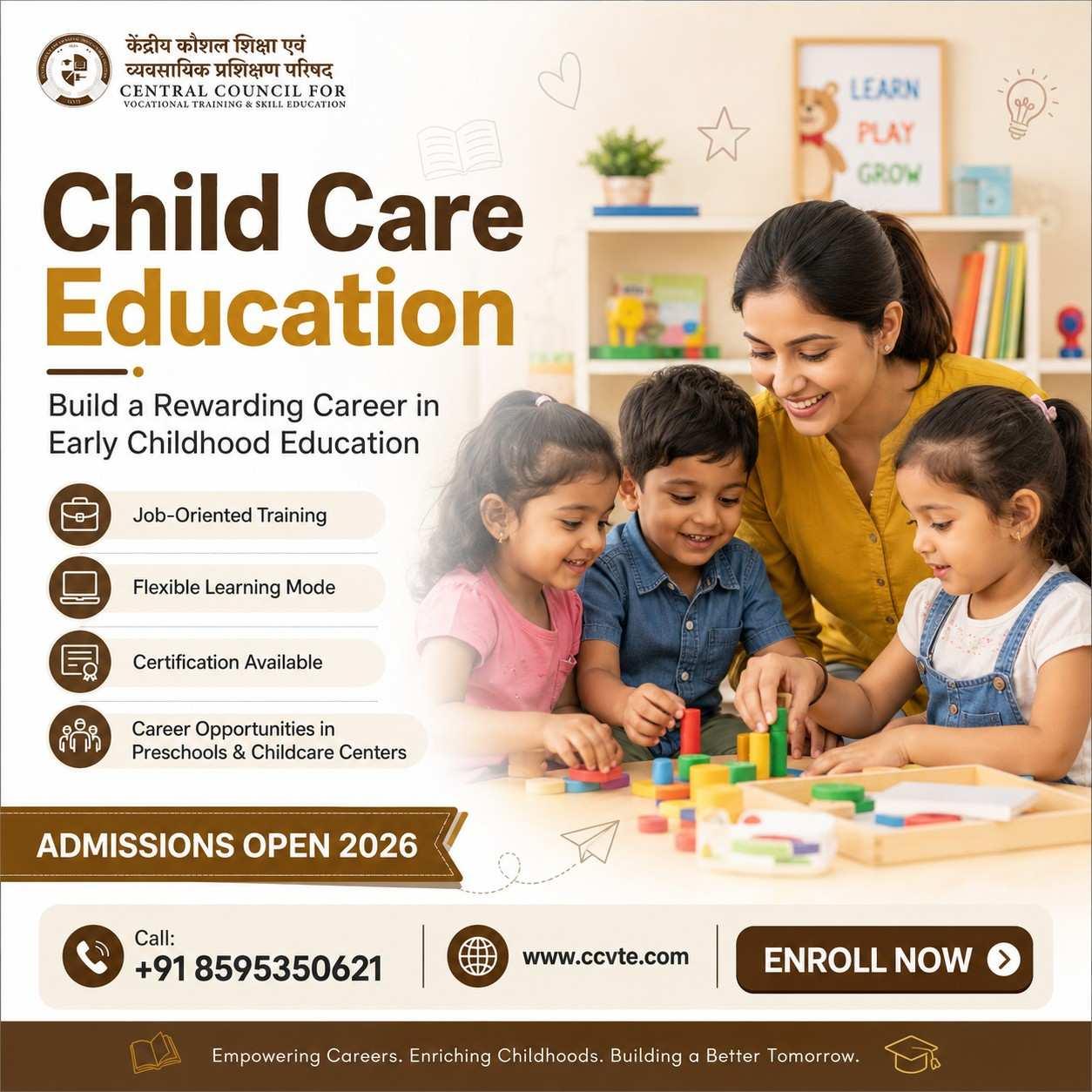
More students are choosing child care education than ever before — and the reason is simple. The demand for trained early educators keeps climbing, while the supply of qualified professionals stays thin.
If you love working with young children, this is your moment. Preschools, daycare centers, and play schools want skilled staff, not casual babysitters. A qualification in early childhood care and education gives you the edge they're looking for.
This guide breaks down 10 concrete reasons why this career path makes sense in 2026 — and how CCVTE (Central Council for Vocational Training and Skill Education) helps you get there.
What Is Child Care Education?
Child care education is professional training that prepares you to care for, teach, and guide children during their earliest years. It blends caregiving with structured learning.
You learn how children grow. How they think. How to support them safely through key developmental milestones.
A trained professional does far more than supervise. You plan age-appropriate activities, build early literacy, and shape emotional and social growth. That's the core of early care education — the right support, at the right age, delivered by someone who knows what they're doing.
10 Reasons Why Child Care Education Is a Smart Career Choice in 2026
1. Growing Demand for Trained Child Care Professionals
The childcare sector is expanding fast. Dual-income households, urban preschool chains, and rising parental awareness all drive demand for qualified caregivers.
Here's the gap: parents now want educators who understand child development — not people learning on the job. That preference rewards trained candidates first. A child care education qualification puts you ahead of untrained applicants competing for the same roles.
2. Opportunity to Make a Positive Impact on Children's Lives
This career changes lives — starting with the youngest. Nearly 90% of brain development happens before age 5.
What a child experiences in those early years shapes how they learn, feel, and connect for decades. As a trained educator, you're not filling time. You're building foundations — language, confidence, curiosity, and social skills that last a lifetime.
3. Diverse Career Opportunities
One qualification. Many doors. Child care education opens roles across schools, daycare centers, and family support services.
Common career paths include:
-
Preschool Teacher — leads early learning classes for ages 2 to 5.
-
Nursery Teacher — guides the youngest learners through their first lessons.
-
Childcare Assistant — supports lead teachers with daily care and activities.
-
Daycare Coordinator — manages schedules, staff, and parent communication.
-
Early Childhood Educator — designs and delivers structured learning programs.
Start as an assistant. Grow into teaching. Move into coordination and management as your experience builds.
4. Flexible Child Care Education Course Duration
Not everyone has two years to spare — and you don't need them to start. CCVTE offers four levels, each building on the last.
-
Certificate – 3 Months — quick entry into assistant-level roles.
-
Diploma – 6 Months — builds practical, classroom-ready teaching skills.
-
Advanced Diploma – 1 Year — prepares you for lead educator positions.
-
Vocational Degree – 2 Years — targets senior and management roles.
This flexible child care education course duration means you choose your pace. Want to start working fast? Begin with the 3-month Certificate. Aiming higher? Stack your way up to the 2-year Vocational Degree without starting over.
5. Accessible Child Care Education Course Eligibility
The entry barrier is refreshingly low. This field welcomes beginners, school-leavers, and career-changers alike.
Typical child care education course eligibility at CCVTE looks like this:
-
Minimum qualification — 10th pass for entry-level Certificate and Diploma programs.
-
Higher levels — 12th pass helps for the Advanced Diploma and Vocational Degree.
-
Age — no upper age limit, so returning learners and homemakers qualify too.
-
Experience — none required; freshers and working adults both fit.
If you finished school and care about working with children, there's a starting point built for you.
6. Valuable Skills for Lifelong Success
The skills you gain reach far beyond the classroom. They serve you for life — in any role, any setting.
Training builds:
-
Communication — explaining ideas clearly to children, parents, and colleagues.
-
Creativity — designing play-based learning that keeps young minds engaged.
-
Patience — staying calm and steady through busy, unpredictable days.
-
Classroom management — organizing activities and handling group dynamics.
-
Child psychology — reading behavior and understanding how young minds work.
These are practical, transferable abilities — the kind employers across many fields genuinely value.
read more: Organic Farming Course: Complete Career Guide
7. Career Stability and Long-Term Growth
Children will always need care. That single fact makes this one of the most recession-resistant careers you can choose.
Early childhood care and education sits at the heart of every functioning preschool and daycare. As governments and parents place more weight on quality early learning, demand for trained staff only grows. Stable today. Stronger tomorrow.
8. Opportunities for Continuous Learning and Advancement
Your first qualification is a starting line, not a finish line. The field rewards those who keep building.
Start with a 3-month Certificate. Add a 6-month Diploma. Progress to a 1-year Advanced Diploma — then a 2-year Vocational Degree. Each level deepens your skills and widens your career options. You climb at your own speed, adding qualifications that match your ambition.
9. Rewarding and Meaningful Profession
Few careers offer this much daily purpose. You watch a shy child speak up. A struggling learner finally count to ten. A nervous toddler walk in smiling.
Those moments add up. The work is demanding — but the emotional payoff is real and immediate. If you want a job that means something every single day, child care education delivers.
10. Strong Future Scope in 2026 and Beyond
The outlook is bright — and getting brighter. The preschool and childcare sector keeps expanding across cities and smaller towns alike.
New play schools open. Daycare chains scale up. Government early-education programs widen their reach. Each expansion needs trained professionals to staff it. Enter the field now, and you position yourself early in a growing market — well ahead of the curve.
Why Choose CCVTE for Child Care Education?
CCVTE keeps the path simple, practical, and built around real career goals. Here's what stands out:
-
Skill-based curriculum — focused on what employers actually need, not just theory.
-
Flexible durations — choose from a 3-month Certificate, 6-month Diploma, 1-year Advanced Diploma, or 2-year Vocational Degree.
-
Practical learning approach — training centered on real classroom skills.
-
Nationwide accessibility — open to learners across regions, students and working adults alike.
-
Career-oriented training — every program targets the roles you want to land.
Start where you are. Grow at your own pace. Build a qualification that matches your goals.
Conclusion
Child care education is a smart career choice in 2026 for one clear reason — demand is rising while skilled professionals stay in short supply. Add meaningful work, strong stability, and room to grow, and the case becomes hard to ignore.
Whether you're a student, an aspiring preschool teacher, a homemaker, or a career-changer, there's a program built for you. Explore CCVTE's Certificate (3 Months), Diploma (6 Months), Advanced Diploma (1 Year), and Vocational Degree (2 Years) programs.
Choose your level. Build your skills. Step into a career that genuinely matters — starting now.
Frequently Asked Questions
Is child care education a good career in 2026?
Yes. Demand for trained educators keeps rising as preschools and daycare centers expand, while qualified professionals remain in short supply. That combination makes it a stable, rewarding, and recession-resistant career choice.
What is the child care education course duration?
CCVTE offers four options: a 3-month Certificate, a 6-month Diploma, a 1-year Advanced Diploma, and a 2-year Vocational Degree. You choose based on your goals and how quickly you want to start working.
What is the child care education course eligibility?
Most entry-level programs require a 10th pass, while higher levels favor a 12th pass. There's no upper age limit and no prior experience needed — making it open to freshers, working adults, and homemakers alike.
What jobs are available after child care education?
You can work as a Preschool Teacher, Nursery Teacher, Childcare Assistant, Daycare Coordinator, or Early Childhood Educator across schools, daycare chains, NGOs, and government programs.
Why is early childhood care and education important?
Nearly 90% of brain development happens before age 5. Quality early care education builds the cognitive, emotional, and social skills that shape a child's confidence and learning for life.
Who should pursue child care education?
Anyone who enjoys working with young children — students, aspiring preschool teachers, homemakers, and career-changers. Patience, warmth, and genuine interest matter as much as marks.
What skills are taught in early care education?
Programs build communication, creativity, patience, classroom management, and child psychology. These practical, transferable skills serve you across the childcare field and well beyond it.

 Arabic
 French
 Spanish
 Portuguese
 Deutsch
 Turkish
 Dutch
Dutch
 Italiano
 Russian
 Romaian
 Portuguese (Brazil)
 Greek
Greek